Here, we engage in open dialogue to understand, explore, and bring Social Ecology to life together.
New: Agora’s public forums are now accessible without registration.
You can view discussions, respond to existing topics, or contribute new ideas under the “guest” designation. In this case, new discussions are subject to moderation before publication to ensure the quality of the exchanges and protect us from bots. Those wishing to participate under their own name or a permanent pseudonym can also create a free account by registering.
The Agora is a space for exchange, reflection, and research inspired by social ecology and communalism. Its aim is to bring together those who wish to contribute to the emergence of societies that are more just, more ecological, and based on direct democracy, mutual aid, and collective autonomy.
The two public forums—one French-speaking, the other English-speaking (shared with the Transnational Institute of Social Ecology – TRISE)—are designed to foster the sharing of experiences, resources, and reflections on the ecological, social, and political challenges of our time.
Whether you are an activist, researcher, student, or simply curious about these issues, feel free to join the discussions or start your own topics. Together, let’s foster a space for dialogue and mutual learning to imagine and build alternatives capable of asserting themselves outside state and capitalist structures.
Énoncés communalistes — Visuels
Quote from
TerKo on 17 February 2026, 15h13
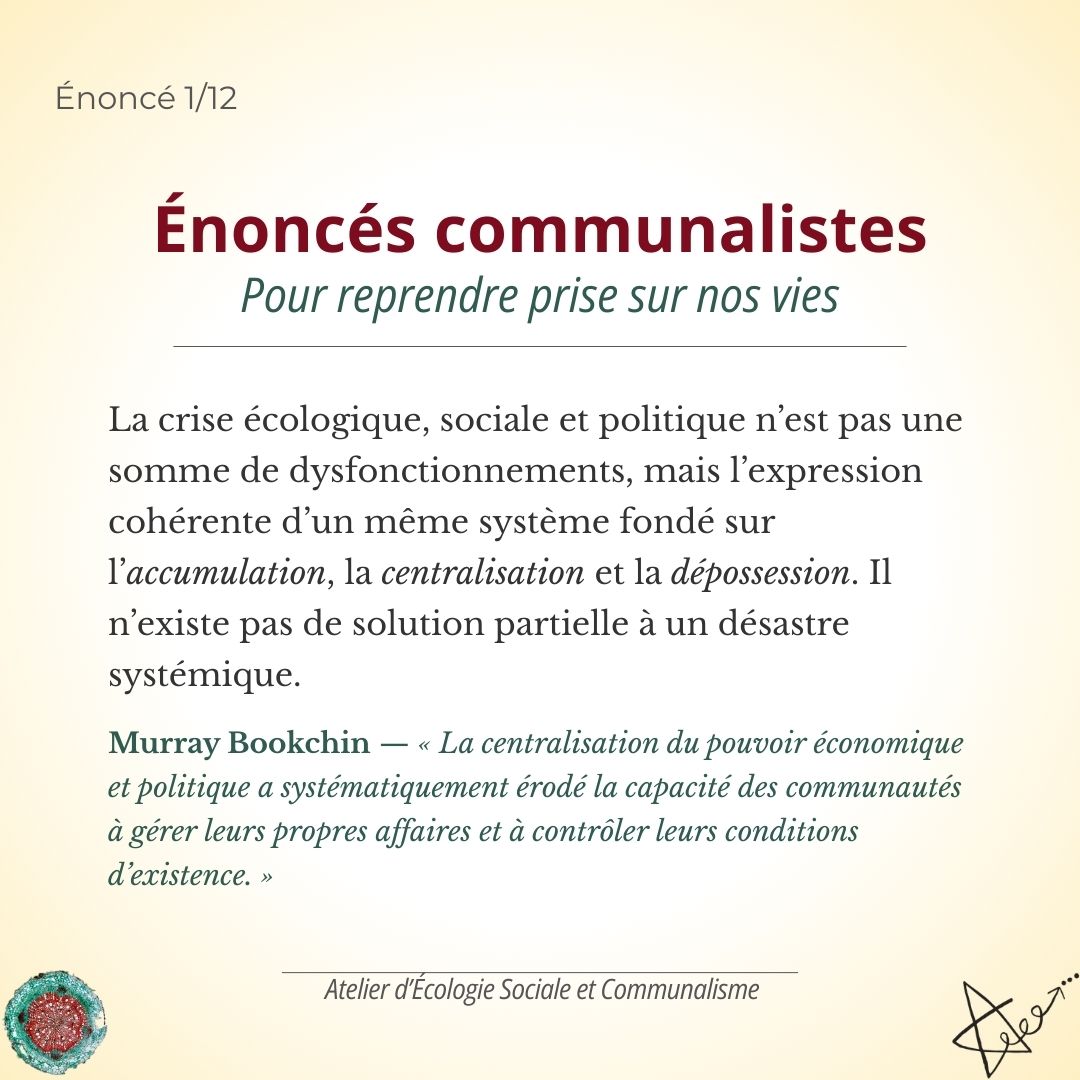
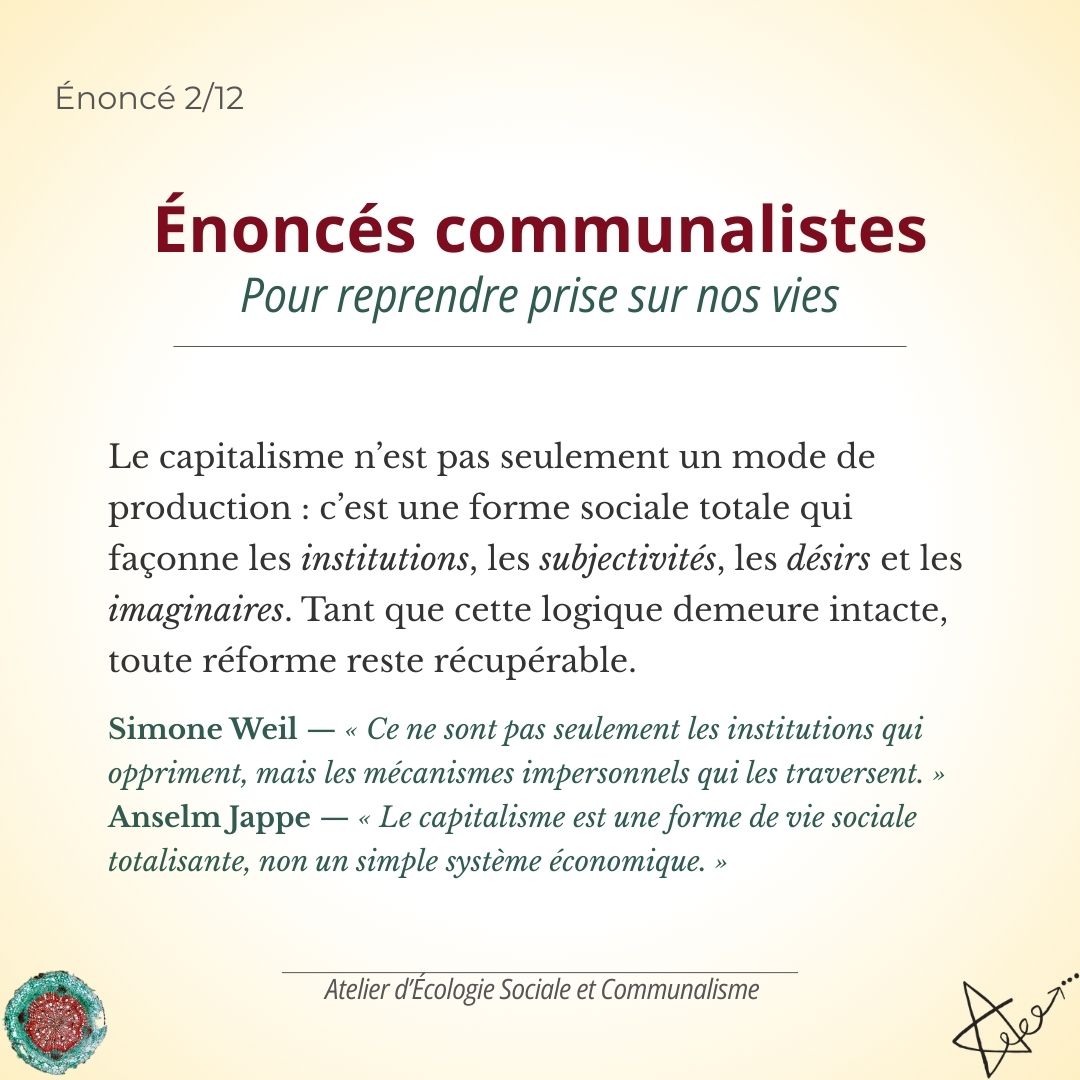
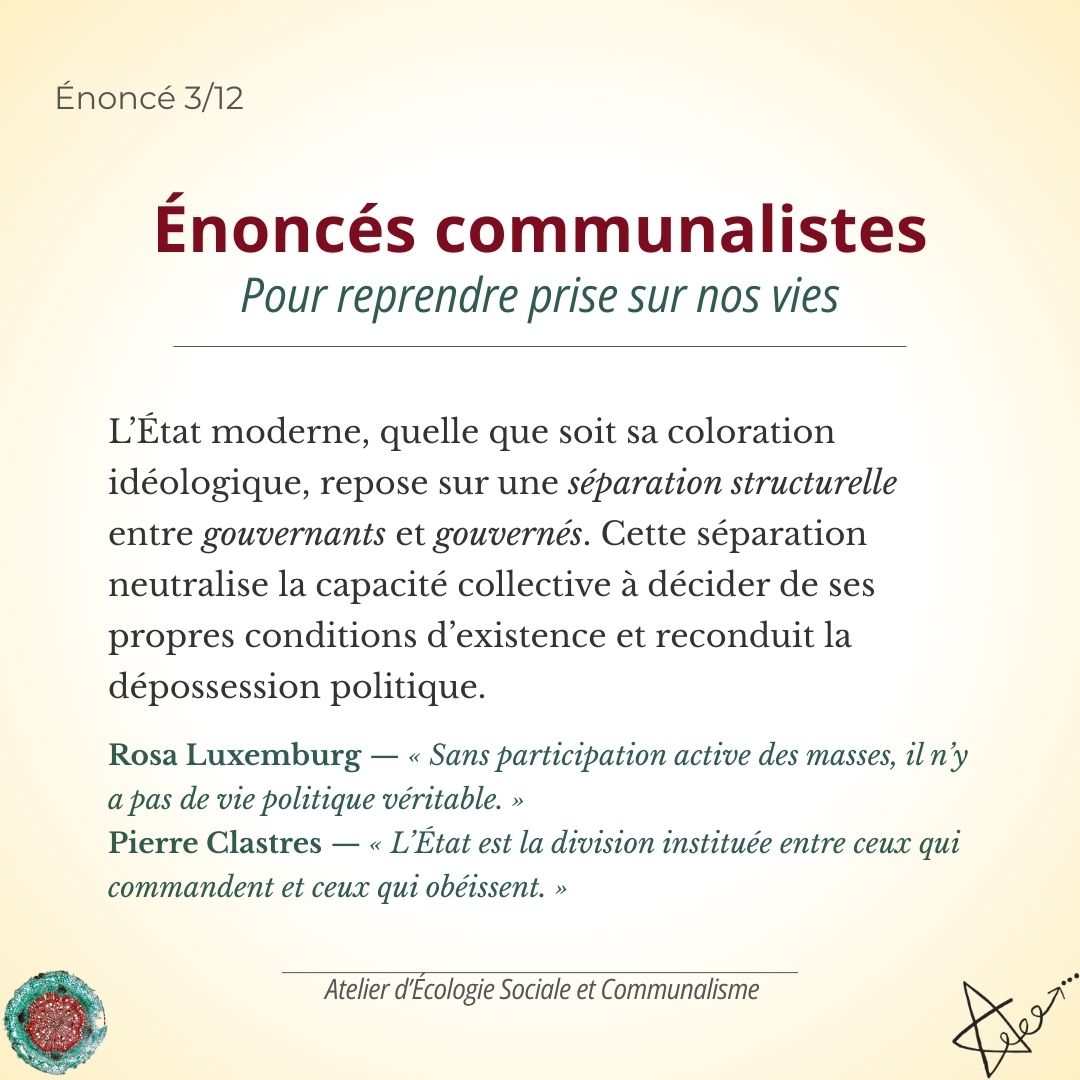
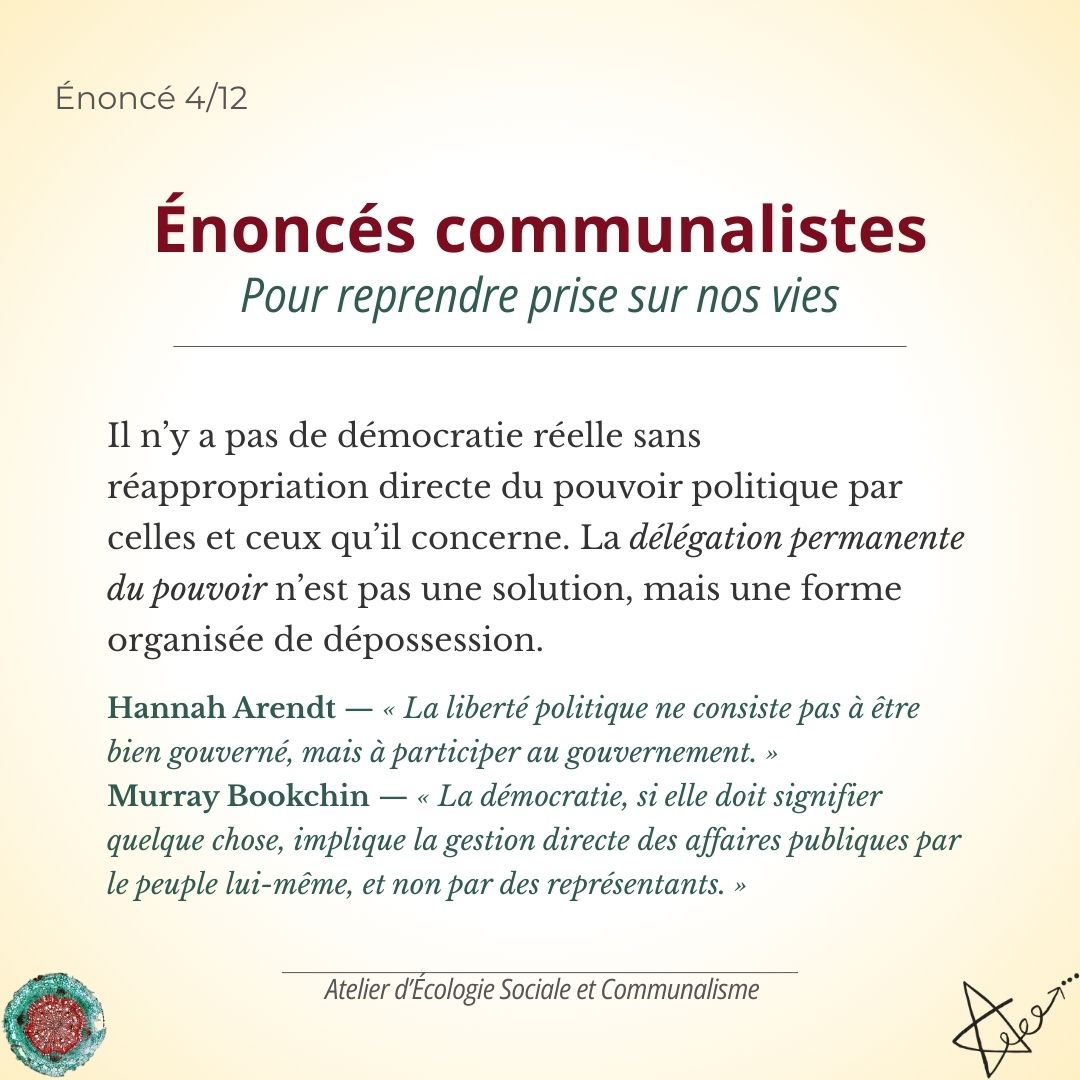
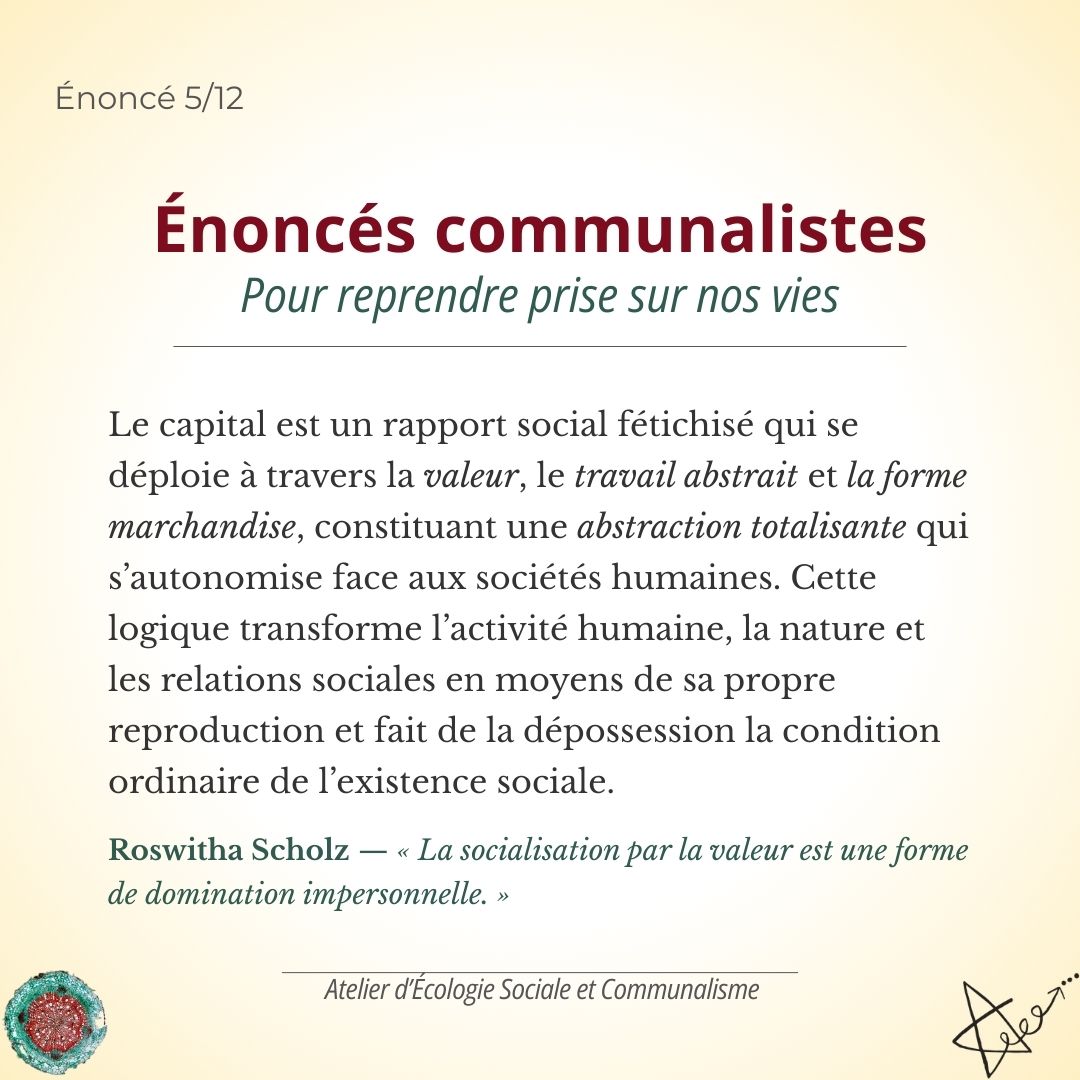
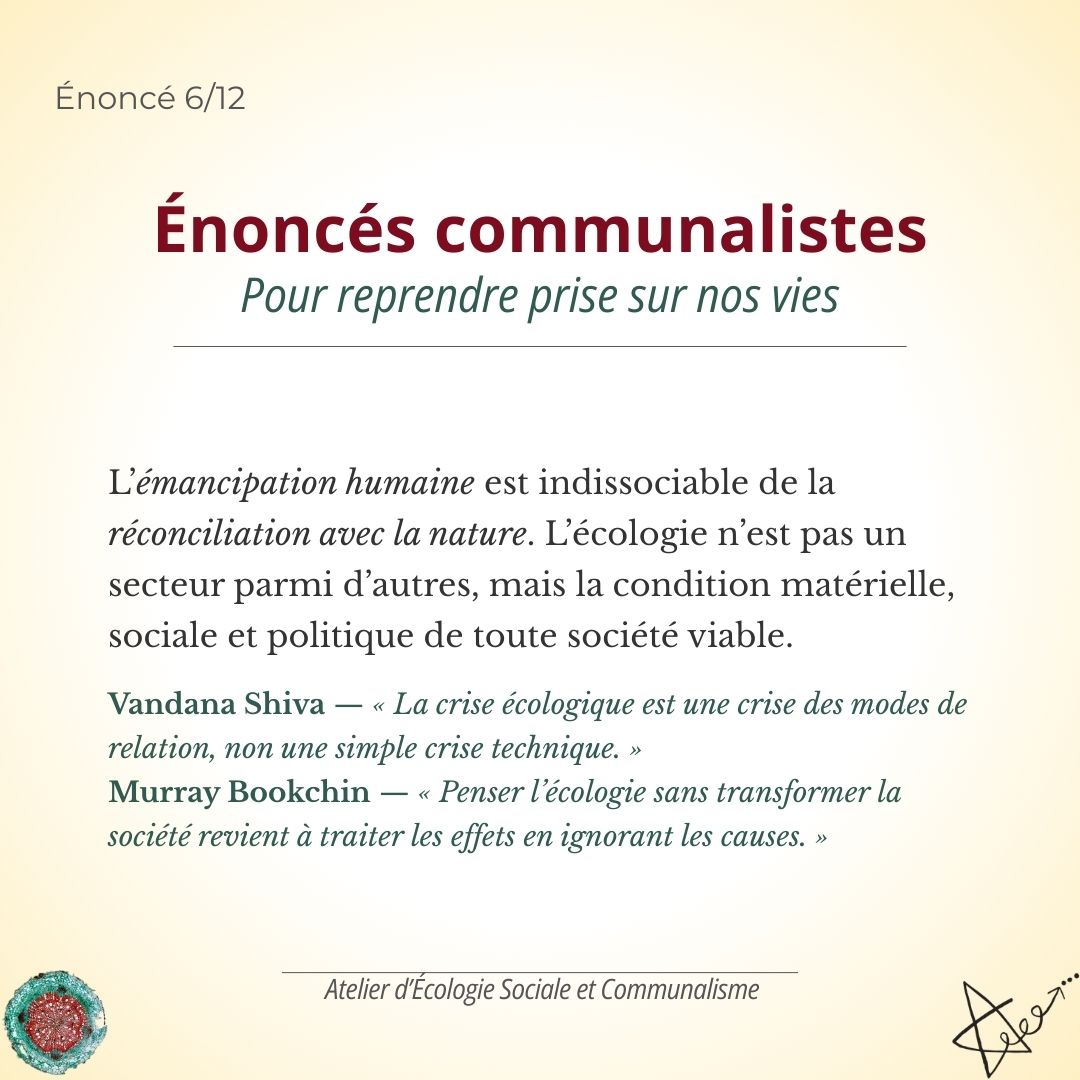
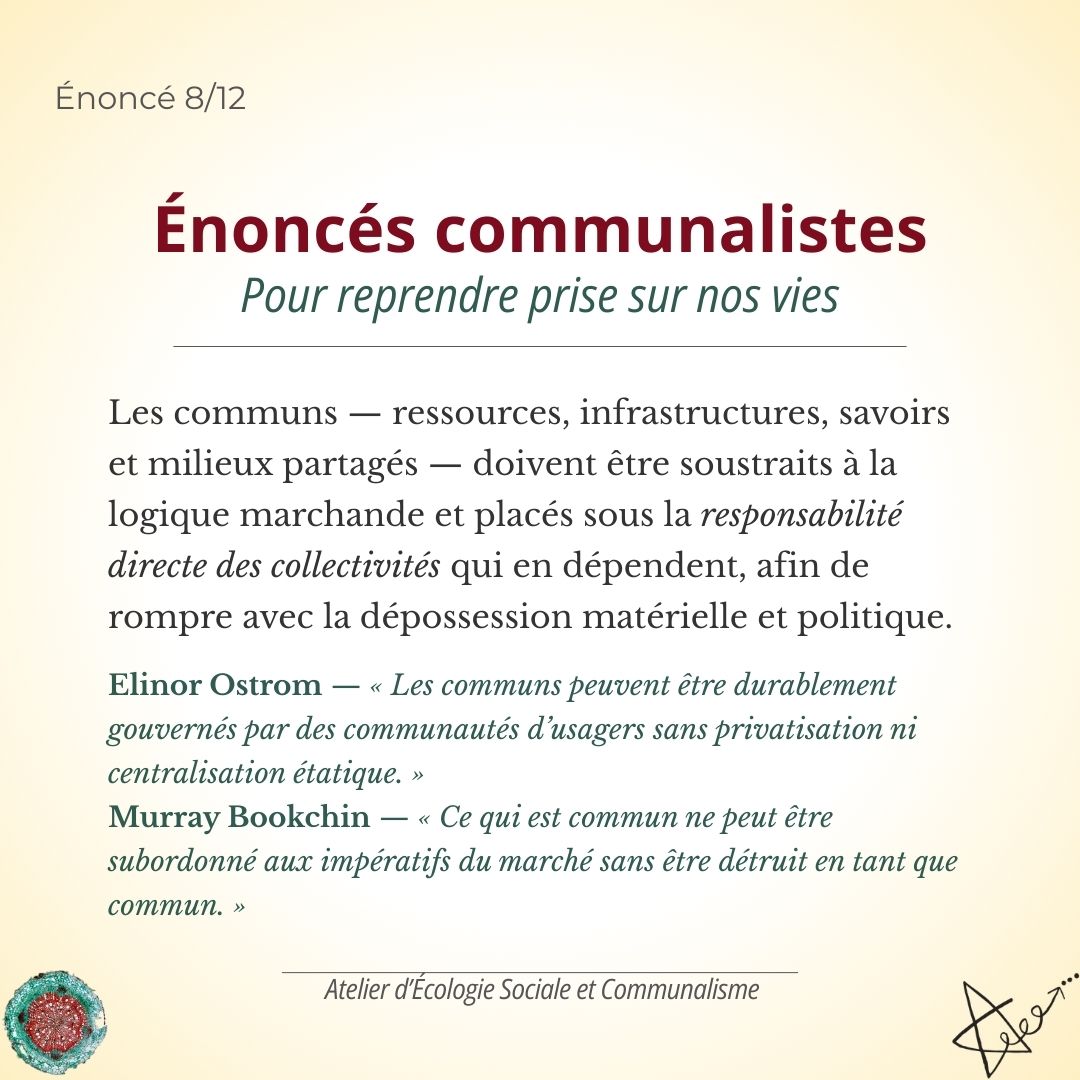
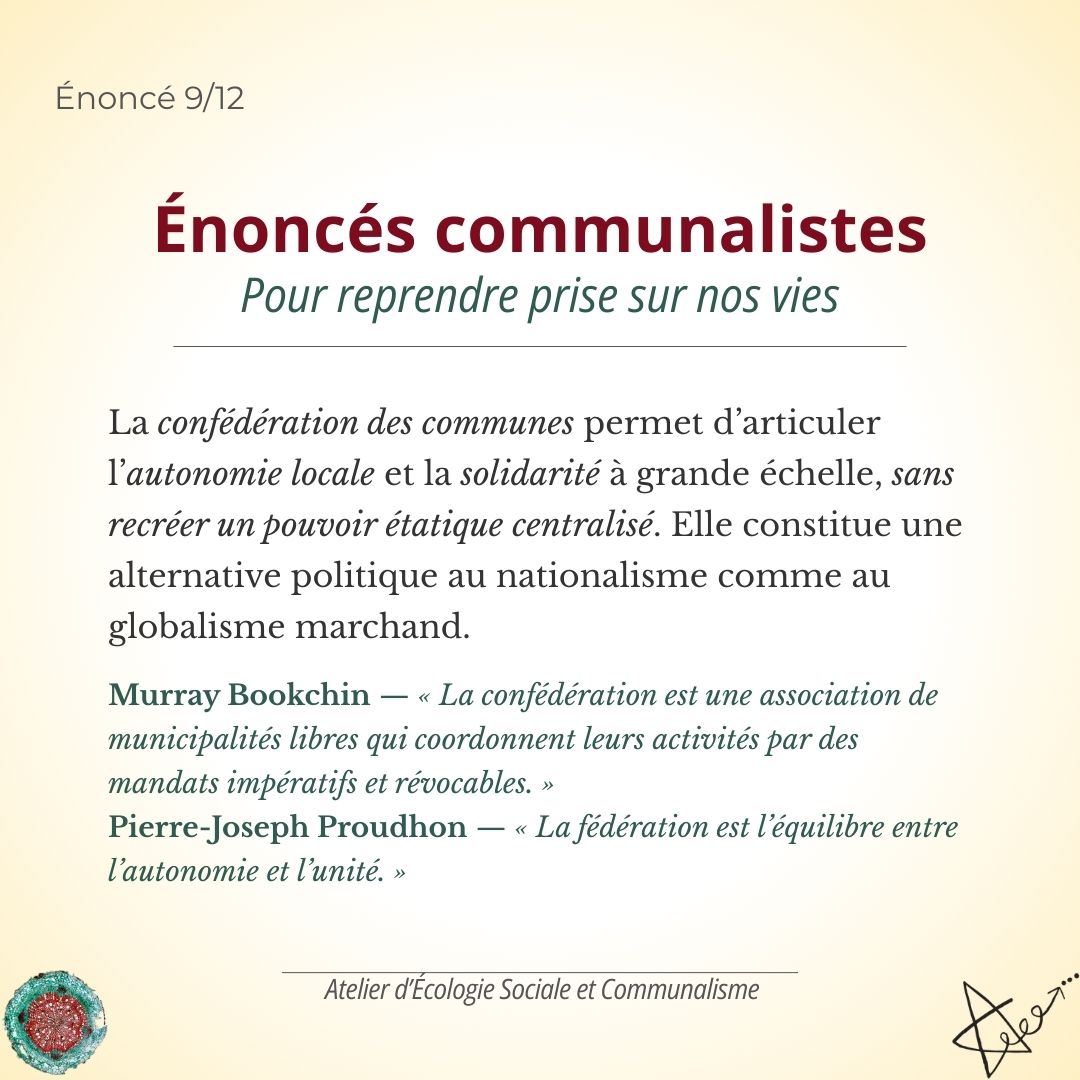
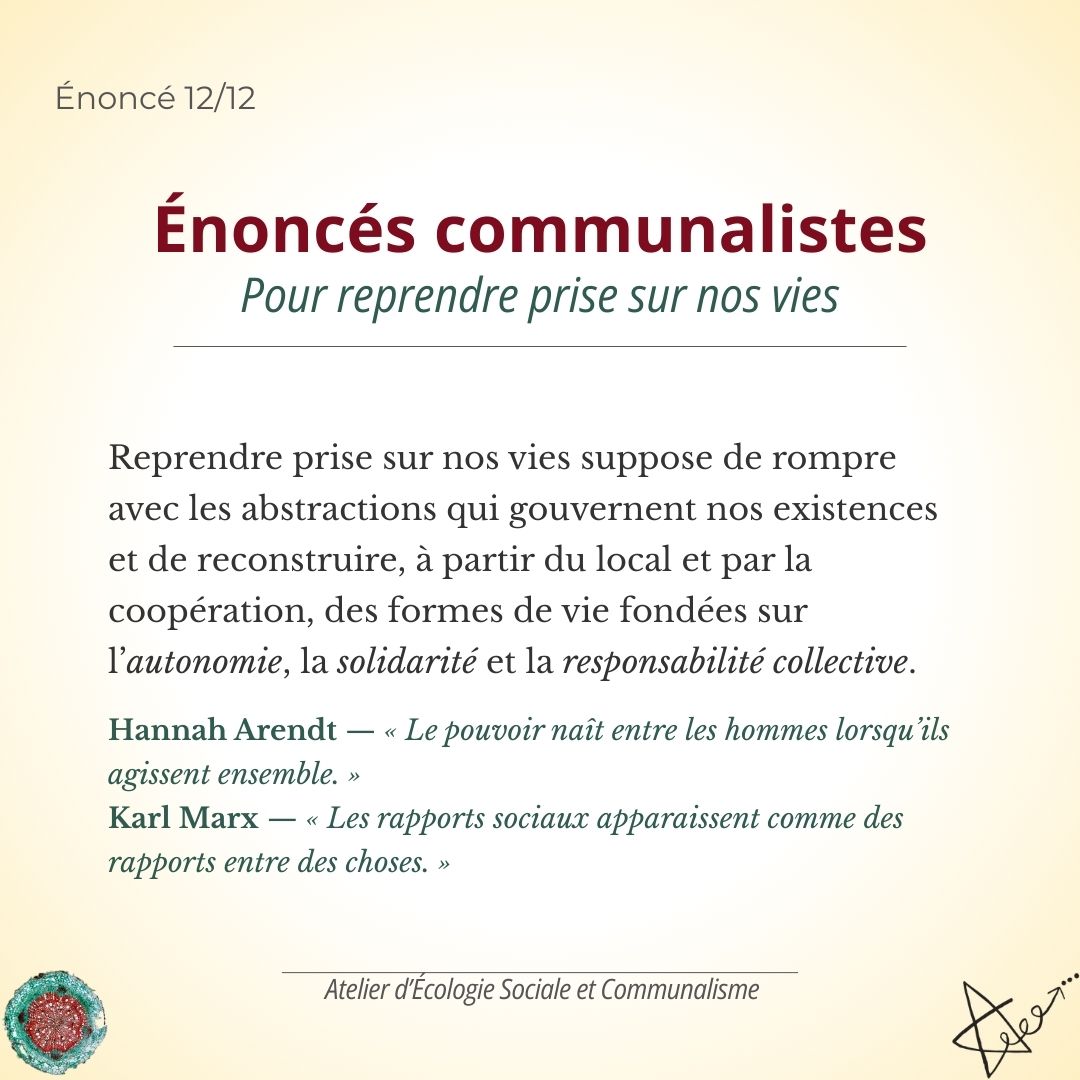
Énoncés communalistes — Pour reprendre prise sur nos vies
La crise contemporaine ne se réduit ni à l’économie, ni à l’écologie, ni à la politique prises séparément. Elle engage nos manières de décider, de produire, d’habiter, de coopérer et de donner sens au monde commun.
À travers cette série, nous proposons douze énoncés communalistes — non comme prescriptions ou modèles, mais comme points d’appui pour penser autrement l’autonomie, les communs, la démocratie et les formes de vie collective.
Un énoncé sera publié chaque jour.
Douze fragments pour interroger les évidences, déplacer les cadres habituels et rouvrir l’horizon d’une politique ancrée dans le local, la coopération et la réappropriation du pouvoir collectif.
Énoncés communalistes — Pour reprendre prise sur nos vies
La crise contemporaine ne se réduit ni à l’économie, ni à l’écologie, ni à la politique prises séparément. Elle engage nos manières de décider, de produire, d’habiter, de coopérer et de donner sens au monde commun.
À travers cette série, nous proposons douze énoncés communalistes — non comme prescriptions ou modèles, mais comme points d’appui pour penser autrement l’autonomie, les communs, la démocratie et les formes de vie collective.
Un énoncé sera publié chaque jour.
Douze fragments pour interroger les évidences, déplacer les cadres habituels et rouvrir l’horizon d’une politique ancrée dans le local, la coopération et la réappropriation du pouvoir collectif.