



“No government fights fascism to destroy it. When the bourgeoisie sees power slipping away, it installs fascism to preserve its privileges. (…) Fascism is not to be debated; it is to be destroyed.” This quote, attributed to Buenaventura Durruti, resurfaces with every resurgence of the far right. It is true, but does it tell the whole story? Does it need updating?
A Child, Not an Enemy
No government fights the far right to destroy it. Not out of secret complicity, but because it is not the enemy of market democracy: it is one of its offshoots. Robert Kurz pointed this out as early as 1993: the new right-wing extremism does not come from elsewhere. It bears witness both to the triumph and to the crisis of a market-economy democracy that has become the only possible world, yet is unable to offer a future to everyone.
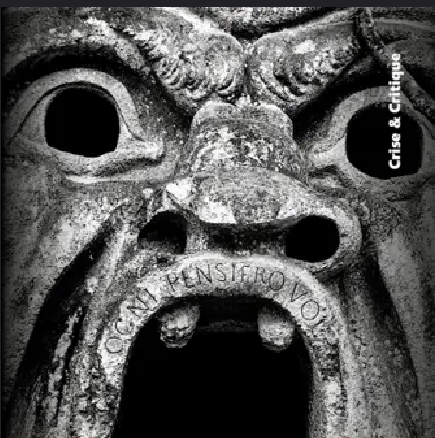
An excerpt from his text of the time, “Die Demokratie frisst ihre Kinder,” translated into French in 2024 in Quand la démocratie dévore ses enfants [When Democracy Devours Its Children] and accompanied by an afterword by Roswitha Scholz, puts it bluntly:
The ground of the victorious market-economy democracy turns out to be a bleak desert, and it is on this very ground that the new barbarism is developing. The democratic “Self” of the abstract, commodified individual experiences the dramatic realization of its own inanity in the face of the system’s blind criteria, which belie the “Self” at the very moment when freedom seems to be winning its final and greatest victory. In reality, democratic freedom turns out to be a void as complete as it is voracious. Like Saturn, the democratic totalitarianism of the market economy devours its own children.
The logic of domination without a subject, intrinsic to the democratic market system, externalizes itself repressively; and it does not initially generate, as a reaction, a new emancipatory critique, but rather a deadly echo of itself. Democracy and right-wing extremism go together like Siamese twins, internally linked by the bloodstream of the abstract process of valorization and its silent constraints. At the end of the modernization process, every democracy, by a logical law, gives rise to the new right-wing extremism in one variant or another, as an immanent reaction. The hypocritical mask of liberality invites one to strike three times; but it is the fist of the same terrifying fetish-entity that strikes in blind madness.
Robert Kurz and Roswitha Scholz, Quand la démocratie dévore ses enfants. Remarques sur les fascismes historiques et le nouvel extrémisme de droite [When Democracy Devours Its Children: Remarks on Historical Fascisms and the New Right-Wing Extremism], trans. into French by Frédéric Point, Albi, Crise & Critique, “Au cœur des ténèbres” series, 2024, p. 44 (our translation from the French).
Domination Without a Subject
More than thirty years ago, Robert Kurz was already describing what we are experiencing today. He does not refute the phrase attributed to Durruti: he digs down to its roots. In 1936, large landowners, the Church, and a segment of the business community did indeed support Franco’s uprising. Even today, factions of the bourgeoisie play an active role at every level, and particularly in propaganda: media empires owned by a handful of great fortunes normalize far-right themes day after day.
But these actors are not the authors of the process. They are, in Marx’s words, its “personifications”: they choose, finance, and disseminate, but they carry out what competition demands rather than inventing it. Beneath their very real wills operates a “logic of domination without a subject”: that of the valorization of capital, which no one decides and which imposes itself on everyone, capitalists included. To target only the actors is to leave intact the machine that produces others like them.
The democratic “Self” is the individual free to buy and sell, to compete and to start businesses. But this freedom is worth only as much as “the system’s blind criteria” grant it: being profitable, employable, and competitive. As productivity makes labor less and less necessary, growing segments of the population discover that this Self carries no weight. The democratic freedom of the market economy then turns out to be “a void as complete as it is voracious.”
This is why market society does not choose fascism the way one chooses a weapon. No board of directors has decided it, even if some of the wealthiest deliberately finance it. Market society secretes it, as an “immanent reaction.”
Kurz, moreover, distinguishes this new right-wing extremism from the historical fascisms. Those had a project: to modernize lagging economies at a forced pace. Today’s emerges “at the end of the modernization process” and no longer has a future to offer. It is merely the “deadly echo” of a system that itself has none left.
A Breeding Ground
Market democracy and the far right, writes Kurz, are Siamese twins “internally linked by the bloodstream of the process of valorization.” This shared blood is competition and separation, and it is on these that the far right feeds.
It arises from the fear of downward mobility, which cuts across all social strata and often strikes in anticipation. From the competition of all against all, which turns the other into a rival before turning them into an enemy. From racisms, which designate who would be “surplus” when there is no longer room for everyone. And from antisemitism, which gives a face to a faceless domination, that is, precisely, to this domination without a subject.
Finally, it stems from a masculinity that demands the restoration of the order it believes it has lost. This order relegates women to what value has always cast out of itself: care, reproduction, the invisible. Roswitha Scholz emphasizes this in her afterword to the book: the crisis of value is also the crisis of a masculinity that had identified with it.
What Serves No Purpose
Kurz speaks of the “hypocritical mask of liberality.” Behind this mask, just as behind the fist of the far right, it is the same “fetish-entity” that strikes.
Confronting it with a moral lecture is therefore pointless. Alexis Piat, commenting on Kurz, sums it up this way: “The liberal and moralizing denunciation of the new right-wing extremism thus appears profoundly hypocritical: it is moved by the effects while actively working in the service of the causes, and is nothing more than the sermon that those still staying afloat deliver to those who never stop sinking.”1 This condemnation, whatever its political color, humiliates those who are sinking and confirms the narrative it claims to combat. Moreover, it shares with the far right the same morality: that of work elevated to a virtue and of merit, which sorts lives.
Countering it with nostalgia for full employment is of no more use. The conditions for integration through wage labor have vanished, and no so-called recovery will bring them back.
This does not mean that everything is of equal value. The freedoms we have won undeniably deserve to be defended. But defending them is no longer enough.
Destroying Its Conditions
The system, writes Kurz, does not “initially” generate an emancipatory critique, but a “deadly echo” of itself. Initially: nothing dictates that it must remain so. This critique, and the practices that carry it, remain to be built.
The far right is not to be debated. To fight it for good is to destroy its conditions, its breeding ground. This means breaking free from the value-form: ceasing to produce in order to sell and ceasing to live by selling one’s labor power. It also means breaking free from the split that shadows it, the one that assigns to women everything that value does not count.
This means establishing, everywhere and from the bottom up, confederated popular assemblies, a direct democracy: no longer the political form of the commodity, but the autonomy of a living, shared commons.
These assemblies would embody what Murray Bookchin called a “municipal moral economy”: an economy in which what is produced, how, and for whom are determined by deliberation and a shared ethic rather than by the market. The critique of value-dissociation compels us to go further: a moral economy without money, that is to say, strictly speaking, an exit from the economy, an anti-economy. This is not about a fairer or more equitably distributed currency, but about needs and means decided directly, in kind. These decisions would follow the principles that Bookchin drew from organic societies: “usufruct and stewardship” rather than property, “the equality of unequals,” and the “irreducible minimum” guaranteed to each and every person. To these is added the “taking from the heap” dear to Kropotkin, for everyone.
Where communes decide together what they produce, how they provide care, and what they do with their territory, the fear of downward mobility loses its object: there is no longer any place to lose when no one has to sell themselves to make a living. Competition loses its raison d’être.
This is not a program for the distant future. It is what the emancipatory movement is already attempting, here and there, in the cracks of the disaster. It is up to all of us to try to give it substance.
1 Alexis Piat, review of Robert Kurz and Roswitha Scholz, Quand la démocratie dévore ses enfants, Actuel Marx, No. 77, 2025/1, p. 215 (our translation from the French).